

 |
|
Elá
Aguiar, Narcissus. Installation
Reddam House Bedfordview
First prize. |

FADA Gallery in association with the
Johannesburg Junior Council (JJC) presents the 2015 JJC Schools’ Art and Design
Awards Exhibition. A diverse range of art and design work was selected for the
awards exhibition and includes artists’ books, paper sculpture installations
and digital media (animation). Schools in the Gauteng province were requested
to submit work produced by grade 11 and 12 learners.
 |
| Paper Installations by Elá Aguiar and Maia Lehr-Sacks respectively. |
And the winners are!
 |
| Ela Aguiar, Narcissus. Paper installation. Reddam House. |

First Prize
Ela Aguiar
Narcissus
Paper
Installation
 |
| Victoria Bench, Untitled Coloured pencil drawings. National School of the Arts. |

Second Prize:
Victoria Bench
Untitled
Coloured
pencils, drawings

Victoria Bench
Adcock Ingram Advertisement
Animation
National Schools of
the Arts
(video to be uploaded soon)


The awards exhibition provides a creative platform to acknowledge and encourage creative skills development amongst the learners in the province.
Those whose works were selected have the opportunity to view their art, professionally displayed, in a public gallery space. However we also wish to acknowledge the role played by art and design teachers at secondary schools in the Gauteng Province.


We also hope to encourage a culture of visiting museums and galleries in preserving and valuing our cultural heritage amongst the youth. The exhibition has been held on an annual basis for the past six years and as in previous years a number of awards are made, sponsored by Herbert Evans.
Innovation, creativity, inherent meaning and technical execution are the key criteria in adjudicating the awards.


Aims and Objectives for the awards Exhibition.
 Annual Exhibition

3 x
Merit Awards.
 |
| Maia Lehr-Sacks, Nautilus. Folded Paper Mobiles Greenside High School |

Maia Lehr-Sacks,
Nautilus
Folded paper mobiles
 |
| Avalon Gullan, Untitled. Wood sculpture. St Stithians Girls |

Avalon Gullan
Untitled
Wood sculpture


Giggs Kgole
Scarcity/surplus: initiation
Digital prints


 |
| Ela Aguir (First prize) receives her award from the Vice Dean, Amanda Breytenbach with Sango Socikwa, JJC Mayor. |
The awards exhibition provides a creative platform to acknowledge and encourage creative skills development amongst the learners in the province.
 |
| Sango Socikwa, the JJC Mayor, announced the winners. |
Those whose works were selected have the opportunity to view their art, professionally displayed, in a public gallery space. However we also wish to acknowledge the role played by art and design teachers at secondary schools in the Gauteng Province.
 |
| Gala awards event. |
 |
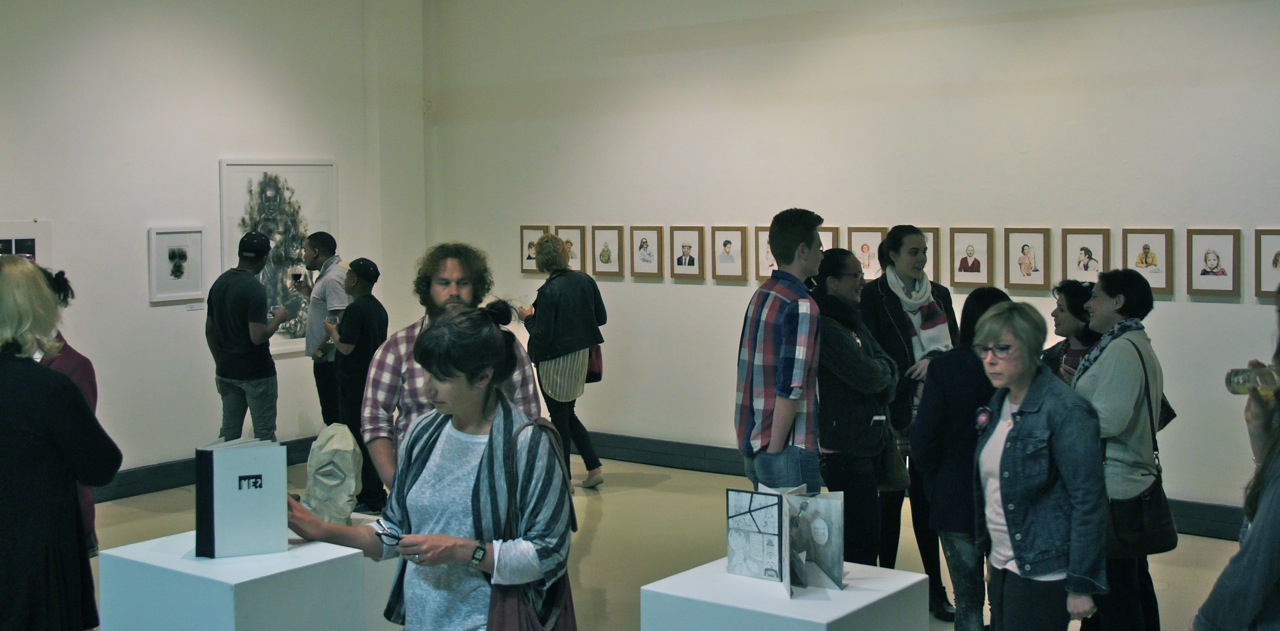
| Exhibition Lower ground floor. |
 |
| Giggs Kgole (St Johns College) receives his merit award, from John Adams and the Vice Dean, also present, the JJC Mayor, Sango Socikwa. |
The organisers’ applied high standards
associated with curatorial and display criteria in setting up the exhibition.
The awards exhibition will hopefully encourage more pupils to embrace their creative
skills, especially at a crucial stage in their career development, seen in the
context of a knowledge and digital economy.

 |
| Victoria Bench receives the second and third prize. National School of the Arts |
Personal expression is of far
greater significance in the twenty-first century, as learners are expected to
embrace new media in their quest to communicate with each other in a global village.
This requires a variety of creative skills, technology and insight.
 |
| Awards Gala event. |

 |
| Maia Lehr-Sacks receives her merit award from John Adams and the Vice Dean. Greenhill High School. |
We also hope to encourage a culture of visiting museums and galleries in preserving and valuing our cultural heritage amongst the youth. The exhibition has been held on an annual basis for the past six years and as in previous years a number of awards are made, sponsored by Herbert Evans.
 |
| John Adams, Handed over the prizes. Inspired the audience with his few words. |
Innovation, creativity, inherent meaning and technical execution are the key criteria in adjudicating the awards.

 |
| Alessia Landi Chairperson Arts and Culture (JJC) Giving her speech |
We wish to thank all the art and design teachers
of participating schools, and our sponsors Hebert Evans, for making this awards
exhibition possible. Working closer with the Johannesburg Junior Council, we
trust this annual awards exhibition will become more inclusive and manifest
their creative endeavours, as captured in the following statement.

Art is not just pretty pictures
and light entertainment: art is a great unifier, a tool for promoting awareness
by critically reflecting on society and an educational tool that can provide
useful skills development and simultaneously inspire self-confidence in the
youth of SA. JJC Arts and Culture. 2014. Available, Accessed 6 September 2014.

Aims and Objectives for the awards Exhibition.
- To Provide the youth of the province with a unified platform for creative expression, whilst honouring their art skills and talents.
- To acknowledge creative output produced at local secondary schools: as work made formally for an art and design (including Technology) subject portfolio and informally, as part of the school’s extramural activities.
- To raise awareness amongst schools of the significant role creativity plays in a pupil’s development.
- Contribute to the development of standards in art and design teaching and leaning amongst secondary schools.
- To promote art and design disciplines as a lucrative career choice and study option at tertiary institutions.
- To stimulate the development of creative role models amongst school peers in awarding prestigious prizes normally associated with achievements in sport and other extramural activities.
- To create a ‘visual platform’ for teaching and learning art and design at secondary schools.
- Exposing work of a high standard produced at a secondary level in a formal gallery space, in a curated fashion, meeting museum standards.
- Encourage a culture of visiting museums and galleries in preserving and valuing our cultural heritage amongst the youth.

We encourage schools to become members of the Johannesburg Junior Council to participate in next year's art and design awards exhibition. Follow the provided link to access information about the JJC on their Facebook page and website.
Follow this blog and or like the FADA Gallery Facebook page, to receive information about future exhibitions and events associated with arts and culture.
FADA wants to thank the judges, the participating schools and and our sponsor, Herbert Evans. A special thank you to Emme Stols, Director at Herbert Evans, for loyal support.


